February 6, 2026 Community Stories
The Strength of Western Mass: Food, Community, and Everyday Resilience
The Valley, known for its farmlands, urban centers, and everything in between, is often described through its contrasting landscapes. Agriculture remains highly visible, with farm stands and regional producers being staples in their communities. Yet this visibility has not translated into equal access or ease for everyone in our three-county region. For many households, putting healthy food on the table has long required trade-offs shaped by wages, transportation, and geography.
What has shifted in recent years is the steadiness of that strain. Demand for community food support across Western Mass no longer rises and falls in cycles. Rural residents face longer distances and limited options. Our cities contend with cost and availability, and working families increasingly rely on local organizations to bridge persistent gaps. The response has been pragmatic rather than aspirational, with nonprofits adjusting in real time to meet needs that show no sign of receding.
The Vision of Grow Food Northampton
CFWM’s Flexible Funding grantee Grow Food Northampton has long argued that access to good food is not only about availability, but about agency. The organization has consistently framed food work as community-powered rather than charity-driven, rooted in relationships with local farmers, growers, and residents. Its programs emphasize education, land access, and market pathways that allow people to engage with food not just as consumers, but as contributors to a regional web of exchange.
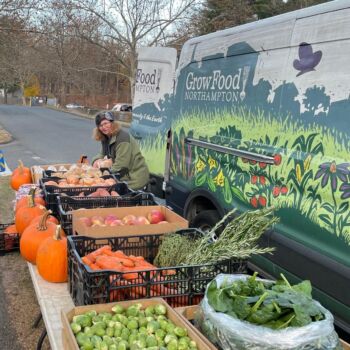
Alisa Klein, Executive Director of Grow Food Northampton, shared that the organization’s work is defined by foresight as much as by immediate need. “What sets Grow Food Northampton apart from other local food system organizations is that we’re thinking about the long-term. Creating a food system that gives us the kind of resilience and strength that can overcome cruel government policies and supply chain breaks, and that can establish a strong, resilient justice-based system for the long term.” She adds that everything from their free mobile farmers market for people who are food insecure to work cultivating community farms and offering community gardens that help residents grow their own food, contributes to creating avenues through which communities can feed themselves directly.

That idea has guided Grow Food Northampton as it responds to shifting pressures across the Valley. By strengthening farm viability, supporting local producers, and investing in systems that keep food circulating close to home, the organization positions resilience as something built over time rather than activated only in moments of crisis. Alisa often speaks about the importance of dignity and long-term sustainability of land, labor, and community trust. Those values are evident in Grow Food Northampton’s steady presence in a region where agricultural abundance and uneven access coexist.
She shared that the temporary SNAP pause in November had a profound impact. “It was a real trauma for people who didn’t have enough to eat and didn’t know how they were going to feed their families. Just because it returned doesn’t mean people feel safe or regained a sense of security. Food is expected to become more difficult to attain.” She later added, “Food is about sustenance, and people are having to give up other basic needs to feed themselves and their families. We serve 1,500 people experiencing hunger, and we heard from them and our advisors that people feel traumatized and scared for their futures. That’s a lot for us in this space to navigate and hold.”
The Commitment of MLK Jr. Family Services
For the team at Martin Luther King Jr. Family Services (MLKFS), another Flexible Funding grantee based in the heart of Mason Square in Springfield, food access is inseparable from the broader mission of equity and community care, aimed at overcoming barriers. “Nourishing a community means caring for the whole person—body, mind, and spirit. Our commitment is to meet our neighbors where they are at, and walk with them,” said Claudia Pazmany, Chief Development Officer. “Food is one doorway into that deeper work and how we honor Dr. King’s legacy in real, everyday lives,” she added, reflecting on the organization’s roots and mission.

What began more than three decades ago as an emergency food pantry quickly became a central expression of that commitment: ensuring that families have reliable access to nourishment as a foundation for health, education, and opportunity. In this work, food is not treated as an add-on or a stopgap, but as a moral responsibility intertwined with the organization’s broader efforts to support the social, emotional, and cultural well-being of its community.
The impact of MLKFS has been strongest when partners, neighbors, and local institutions refuse to let scarcity define the outcomes for their community. During the recent SNAP pause, when protein/meat became critically scarce, and one of their providers could no longer supply food, the strength of their collaborative network was immediately tested. Partner organizations stepped in without hesitation, while timely local investment from Odell Women’s Center, PeoplesBank, the City of Springfield through Springfield Public Health, along with countless other community members, generated hundreds of additional pounds of food for families at a moment of great need.
When traditional supply chains fell short, the network adapted, redirecting donations to ensure that families continue to receive culturally relevant and nutritious food. This ability to pivot demonstrates our region’s shared understanding that food access is a public health necessity and collective responsibility.
Looking ahead, MLKFS remains attentive to the ways vulnerability can compound across the region. Rising demand, transportation barriers, and gaps in school-based meals leave some of the most vulnerable residents facing ongoing uncertainty. In response, the organization is exploring year-round delivery and support programs to reach those most at risk during winter months and school breaks.

Even amid these challenges, hope remains constant. As Emergency Food Pantry Manager Lenise Williams adds, “The community has and continues to respond in ways we could not have imagined, and it arrived when our emergency food pantry lines were peaking with a 35% increase due to the SNAP withholding, causing great panic and anxiety.” By sustaining strong relationships, keeping commitments, and remaining a reliable partner, the organization continues to strengthen both its immediate impact and the long-term resilience of its community.
Every food offering shared, every interaction, and every collaboration reinforces the sense that food access is not only a need but a measure of the region’s capacity to care for itself. Claudia adds, “Addressing the needs of this community requires more than direct services. It demands a relationship-centered, culturally grounded, and community-led approach that reflects the lived experiences of those most affected.”
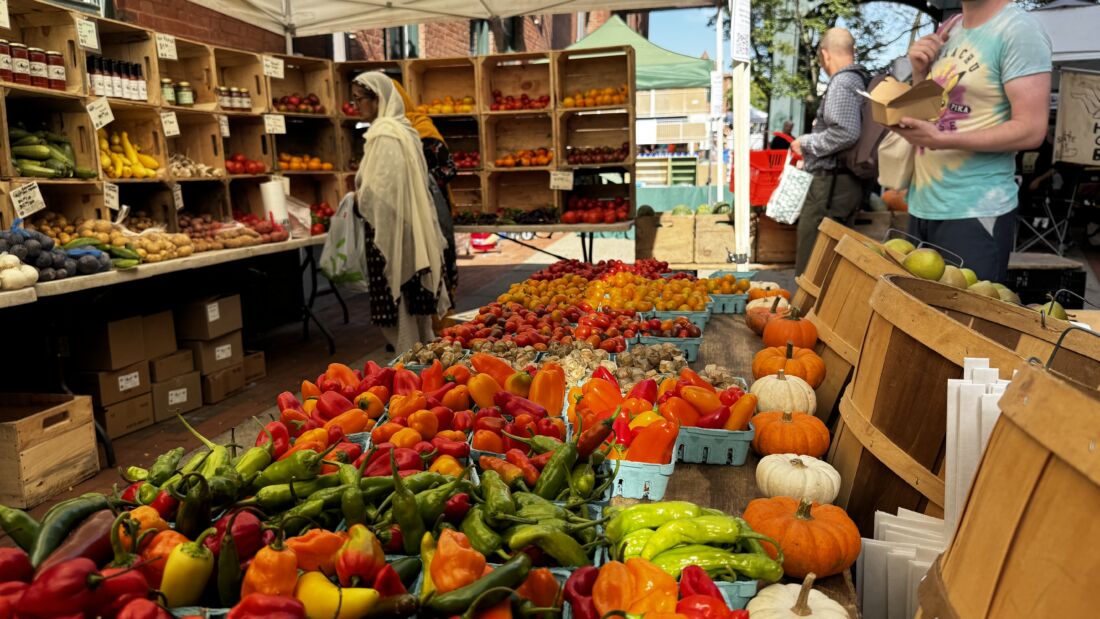
Across our region, some of the most effective responses have come from organizations that understand the relationship between our localized needs and our food systems, not just as a single issue but as a daily reality shaped by our place and people. Organizations like Grow Food Northampton have spent years building infrastructure around local agriculture, education, and access, connecting farms, growers, and residents in ways that strengthen the regional food economy while responding to immediate needs. Others, such as MLKFS, have expanded their mission by operating a full emergency pantry while creating a hub for public health support. This approach has strengthened its reputation as a trusted community resource, and deepened relationships and partnerships while meeting neighbors where pressures are most acute. Together, their efforts, along with those of so many others in our region working on food insecurity, illustrate how food support has become less about meeting a temporary need and more about building sustainable, long-term solutions.