September 22, 2026 Blog
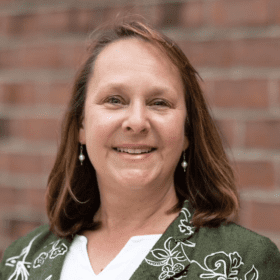
Darlene Elias, Recipient of the Kent Alexander Radical Imagination Award
Earlier this year, Darlene Elias received the Kent Alexander Radical Imagination Award, an honor for which she was nominated by Nicole Martin Young, the award’s former recipient. The nomination recognized her repetitive habit of stepping into rooms unlike any she was raised in, of seeking out company that may be unsettled by a presence different than their own. “When I think about why Nicole Martin Young selected me as an individual worthy of this recognition, I think it’s because I know how to immerse myself in an environment and in circles and places that are not often prepared to cultivate and nurture who we are as individuals, as people of color, and in my particular case as a Latina.”

Elias is a writer and poet of Hawaiian and Puerto Rican decent. She defines her ideological approach to her work as anti-colonial feminista. She writes literature, poetry, and performs spoken word in an effort to elevate her experience as part of the diaspora living in the U.S.
“Often times we grow up in this world and society not feeling safe,” she says. “People tend to say to me, ‘why are you doing that? Why are you going there? Why are you spending time with these people, these individuals that don’t look like you, who don’t have your best interest at heart, that could care less about your life, your future?’ One of the reasons why I do that is because I want people to know who I am. I want people to know about my culture. I want people to know Puerto Ricans and the struggles. The good things and the bad things. And what makes us beautiful as people.”
Elias is the co-founder of the Writing Sisters, a community of women who identify as BIPOC and LGBTQ. They meet twice each month to share and grow their literary skills as artists and to speak about ways they may be able to impact their communities positively. Their performances have taken place at venues in the heart of the community, including an upcoming show at Holyoke Media on October 16 in support of Domestic Violence Awareness Month. Writing Sisters seeks not only to elevate the voices of its members, but also to make a difference. Elias says it is in her nature.

“I remember standing up against the demolition of an apartment building that I lived in as a young woman. It was one of the first stable neighborhoods and communities I lived in coming out of New York City, and years later the city had decided it was going to demolish this apartment complex that had 500 Puerto Ricans living in it. And I said, No! If I have anything to do with it, I’m going to fight back. And I did.”
Elias believes that when you’re an artist and you dare to go into spaces that aren’t interested in receiving you or recognizing who you are – perhaps because they’re curious, skeptical, or cynical- there is an inherent risk in doing what you strongly feel a need to do. She believes that, often times, people of color are expected to behave and act in a certain way because that’s what society seeks. And in that process of accepting those limitations, people of color lose their voices and opportunity to grow. “We hide and mask who we are. And what I think I do—and do well—is I speak out, I act out, I sing, and I cry. I don’t shy away from expressing who I am or my pain. When I express my pain,” she says, “it only leads to liberation. I love that as an artist I have my medium and I have the power to do that.”
Elias recalls the time she started the Western Mass Boricuas for the Liberation of Puerto Rico, a regional activist collective in Western Massachusetts part of the broader Puerto Rican anti-colonial and independence movement. “I remember us making signs after Hurricane Maria, after Trump didn’t want to release funding for Puerto Rico. We showed up to one of Ed Markey’s town halls with signs, and he was very surprised. It’s about elevating our struggle. The people who have the power in our country need to know about injustices; about the oppression we face as Puerto Rican people. And so, part of my literary activism and the pieces that I write, and my creative side elevate that experience. I feel like I’ve done that a lot in my writing and in my community performances, and in the opportunities that I’ve had to collaborate with other people…As long as I’m empowered and as long as the community uplifts me, I’m going to continue to tell our story as best I can.”
Authors and Contributors:
Darlene Elias